
Why Excavator Knowledge Matters for Procurement and Site Efficiency
In today’s construction environment, the right equipment choice can make or break a project’s schedule and budget. Excavators play a critical role—handling trenching, lifting, grading, demolition, and site preparation. But when downtime hits due to part failures, your project timeline and costs are at risk.
For procurement teams, understanding excavator components is more than a technical exercise—it’s a way to ensure you select the right machine for the job, minimize unplanned delays, and make informed rental decisions.
The Three Major Component Systems of an Excavator
1. Undercarriage – Stability and Mobility
The undercarriage supports the machine’s movement and stability across varying site conditions.
- Tracks or Wheels – Tracks excel in rough, muddy, or uneven terrain; wheeled models offer greater maneuverability in urban or paved environments.
- Sprockets and Idlers – Guide and drive the track system.
- Rollers – Support the machine’s weight and keep tracks aligned.
- Rock Guards – Shield the track system from debris damage.
2. Cab – Operator Control and Safety
The cab houses critical controls and ensures operator comfort and safety.
- ROPS (Rollover Protective Structure) – Protects the operator in case of tipping.
- Control System & Display – Operates the boom, arm, bucket, and movement.
- Engine, Fuel, and Hydraulic Systems – Power the machine and enable smooth hydraulic performance.
- Counterweight – Balances the excavator during heavy lifts.
3. Boom, Arm & Bucket Assembly – The Workhorse
This assembly handles the digging, lifting, and material movement.
- Boom – Connects to the cab and provides vertical reach.
- Arm (Stick) – Extends reach and connects to the bucket.
- Bucket – Available in various designs for digging, trenching, grading, or handling rock.
- Hydraulic Cylinders – Deliver the power needed for movement and force.
Types of Excavators and When to Use Them
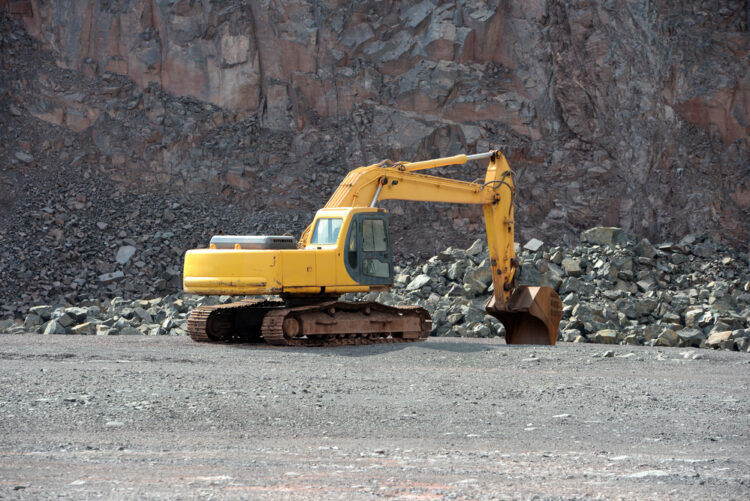
- Crawler Excavators – Tracked models for heavy-duty site work.
- Wheeled Excavators – Agile for city and road projects.
- Mini Excavators – Compact, ideal for residential or tight access sites.
- Long-Reach Excavators – Extended booms for dredging or deep excavation.
- Zero-Tail Swing Excavators – Optimized for confined spaces.
- Dragline Excavators – Rope-operated for large-scale dredging or mining.
Read our guide on how to choose the right excavator size for your project to make an informed decision before renting.
When a Part Fails – Why Renting Can Outperform Repairs
From hydraulic hoses to undercarriage components, wear and tear is inevitable. But sourcing parts, waiting for repairs, and risking extended downtime can halt productivity.
With National Dispatching’s nationwide rental service, you can:
- Bypass delays from parts procurement and repairs
- Access pre-serviced machines ready for immediate deployment
- Select the right size and specification for your project needs
- Avoid long-term maintenance and storage costs
Why Procurement Teams Choose National Dispatching
- Nationwide Availability – Multiple equipment sizes and configurations ready to ship all over the US.
- Fast Turnaround – Rapid dispatch reduces downtime and keeps projects on schedule.
- Fully Serviced Equipment – Inspected and maintained to meet industry standards.
- Streamlined Portal Access – Manage rentals, track usage, and monitor costs across job sites in one platform.
- Dedicated Support – Responsive dispatch and service teams ensure operational continuity.
Final Takeaway
Knowing the key components of an excavator equips project managers and procurement professionals to make faster, smarter rental choices. When equipment downtime threatens deadlines, National Dispatching delivers fully serviced excavators on demand, anywhere in the US—so your crews can stay productive without the cost and complexity of ownership.
Check real-time excavator availability now and get your equipment on site fast.