
Blog
Construction Site Fencing

Construction Site Fencing: What Type Do You Need and When Do You Need It?

A missing fence can shut down a job site faster than a delayed material delivery. One unsecured access point is enough for theft, liability claims, trespassing, or failed inspections. That’s why contractors rely on construction site fencing rental services before excavation starts, not after problems show up.The challenge is choosing the right type of fencing for the project in front of you. A downtown commercial build has different security needs than a short-term utility repair or highway expansion project. The wrong setup creates access issues, visibility problems, and unnecessary rental costs.This guide breaks down the most common types of temporary fencing for construction, when to use each one, and what to look for in a reliable rental partner. Whether you’re securing a single site entrance or managing multiple active projects, the right fencing setup protects your crew, equipment, schedule, and liability exposure.

Why Construction Site Fencing Is Non-Negotiable

Construction site fencing protects workers, equipment, materials, and the public. It also helps contractors meet site security obligations and reduce liability exposure.Most active projects require perimeter control to prevent unauthorized access. OSHA expects employers to maintain safe work environments and protect the public from job site hazards. Certain municipal and state permitting authorities also require perimeter fencing before work begins.Without proper barriers in place, contractors face:
  • Equipment theft
  • Material loss
  • Trespassing incidents
  • Safety violations
  • Delayed inspections
  • Increased insurance risk
A secure perimeter also improves day-to-day operations. Crews can manage deliveries, vehicle access, and pedestrian movement more efficiently when the site has designated entry points and controlled boundaries.For projects in urban areas, schools, hospitals, or public infrastructure zones, job site security fencing becomes even more important because foot traffic stays close to active work areas.

What is temporary fencing for construction?

Temporary fencing for construction refers to portable perimeter barriers used to secure active job sites, restrict unauthorized access, and improve safety compliance during construction activity.Contractors typically rent temporary fencing because project timelines, site conditions, and access needs change throughout the build.

Types of Construction Site Fencing. Which One Do You Need?

Different projects require different levels of visibility, security, mobility, and access control. Choosing the wrong fencing type can create operational issues on site.Types of Construction Site Fencing
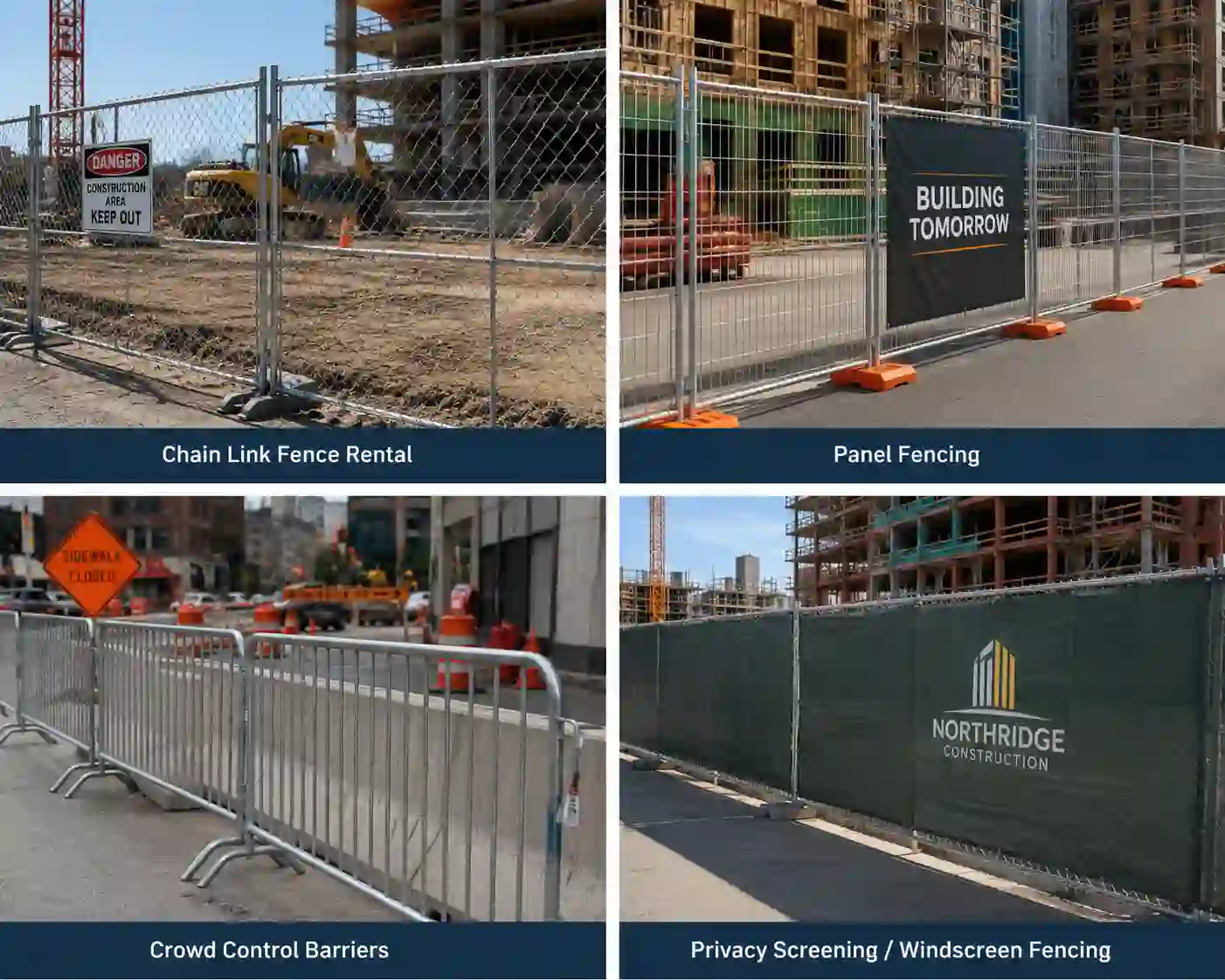
Chain Link Fence Rental

Chain link fence rental is the most common option for medium to large construction projects because it balances visibility, security, and cost.These systems usually include galvanized steel panels mounted on stands or driven posts. Contractors often use them for:
  • Commercial developments
  • Roadwork projects
  • Equipment staging yards
  • Long-duration builds
Advantages:
  • Durable and reusable
  • Fast installation
  • Allows site visibility for supervisors
  • Supports gates and controlled access points
Chain link fencing also works well when crews need flexibility. Sections can be moved or expanded as project phases change.

Panel Fencing

Panel fencing uses freestanding temporary fence panels connected with clamps and weighted bases. It works best when contractors need quick deployment without permanent ground penetration.This option is ideal for:
  • Short-term projects
  • Sidewalk repairs
  • Emergency utility work
  • Urban construction zones
Benefits include:
  • Fast setup and removal
  • Minimal surface disruption
  • Portable configuration
  • Suitable for paved surfaces
Many contractors choose panel systems when city regulations restrict digging or anchoring.

Crowd Control Barriers

Crowd control barriers are lighter-duty steel barricades designed to guide pedestrian traffic rather than secure heavy equipment.You typically see these around:
  • Sidewalk diversions
  • Public event construction
  • Temporary walkways
  • Street-facing projects
These barriers help maintain public safety while keeping access routes organized.They are not a replacement for full perimeter fencing on active heavy construction sites.

Privacy Screening and Windscreen Fencing

Privacy screens attach to temporary fencing panels to reduce visibility into the site.Contractors use privacy screening when they need to:
  • Block public view
  • Reduce dust spread
  • Improve wind protection
  • Increase site security
This setup is common on:
  • High-profile commercial projects
  • Government sites
  • School renovations
  • Residential developments near occupied properties

Privacy screening also discourages theft because valuable equipment and materials remain less visible from outside the perimeter.

When Do You Need Each Type?

The right fencing choice depends on project duration, location, traffic exposure, and security risk.
Project ScenarioRecommended Fencing TypePrimary Goal
Long-term commercial constructionChain link fence rentalSecurity and controlled access
Downtown sidewalk repairPanel fencingFast deployment and pedestrian safety
Public event construction zoneCrowd control barriersTraffic management
School or hospital renovationPrivacy screening fencingSafety and reduced visibility
Highway or infrastructure projectChain link with screeningEquipment protection and perimeter control
Emergency utility repairPortable panel fencingRapid setup

Quick decision guide for contractors

Choose chain link fencing if:

  • The project lasts several months
  • You need equipment security
  • Multiple crews access the site daily

Choose panel fencing if:

  • You need same-day setup
  • Ground penetration is restricted
  • The site layout changes frequently

Choose privacy screening if:

  • The site faces public streets
  • Theft risk is high
  • Dust and visibility need control

Choose crowd control barriers if:

  • You only need pedestrian routing
  • The work area changes daily
  • Public access remains nearby

How to Choose the Right Temporary Fencing Rental Partner

Not every fencing provider understands active construction operations. A reliable rental partner should support your project schedule, safety requirements, and changing site conditions.

Fast turnaround matters

Construction schedules shift constantly. Your fencing provider should deliver quickly, especially for emergency work, utility repairs, or schedule accelerations.

Ask:

  • How quickly can fencing be delivered?
  • Can they handle multi-site coordination?
  • Do they support last-minute requests?

OSHA and site compliance knowledge

A fencing vendor should understand basic OSHA site perimeter requirements, municipal permit expectations, and job site safety practices.

They should also help contractors:

  • Configure proper access points
  • Maintain emergency entry routes
  • Separate public walkways from active zones

If the provider cannot explain how their setup supports compliance, that’s a problem.

Flexible rental terms

Projects rarely finish exactly on schedule. Flexible rental periods prevent unnecessary extension headaches.

Look for providers that offer:

  • Weekly and monthly rental options
  • Easy expansion or reduction
  • Relocation between sites
  • Scalable inventory

Delivery and installation support

Fencing delays create project delays. A good provider coordinates delivery windows around your site activity and access restrictions.

This becomes critical on:

  • Tight urban sites
  • Multi-phase projects
  • Night work operations
  • Highway construction zones

Centralized vendor coordination

Managing fencing separately from equipment, trucking, and materials creates unnecessary communication gaps.

Working with a provider like National Dispatching allows contractors to coordinate fencing logistics alongside broader construction support needs.

That reduces vendor overlap and simplifies scheduling across active projects.

Conclusion

The right fencing setup protects more than your perimeter. It protects your schedule, equipment, workforce, and liability exposure.

Choosing the correct temporary fencing for construction depends on your project type, duration, location, and security requirements. Chain link systems work well for long-term builds, while portable panels and crowd barriers support fast-moving or public-facing projects.

If you need reliable construction site fencing rental support with responsive coordination and flexible deployment, contact National Dispatching for a customized quote tailored to your job site requirements.

You Might Also Like

Leave a Reply

Your email address will not be published. Required fields are marked *

x Rental Equipment Protection Plan REP® provides coverage for specified damages or loss to the rental equipment. REP® amounts can be refunded if you provide a valid Certificate of Insurance (COI) meeting required limits and language prior to delivery of your rental. Terms and Conditions apply. In the event of loss, a deductible is required. Please refer to the National Dispatching Rental Agreement Terms & Conditions for more information on REP® and COI requirements.
Call me back
[contact-form-7 404 "Not Found"]